Running a Truck Parts Business in Africa: What I've Learned in Twenty Years
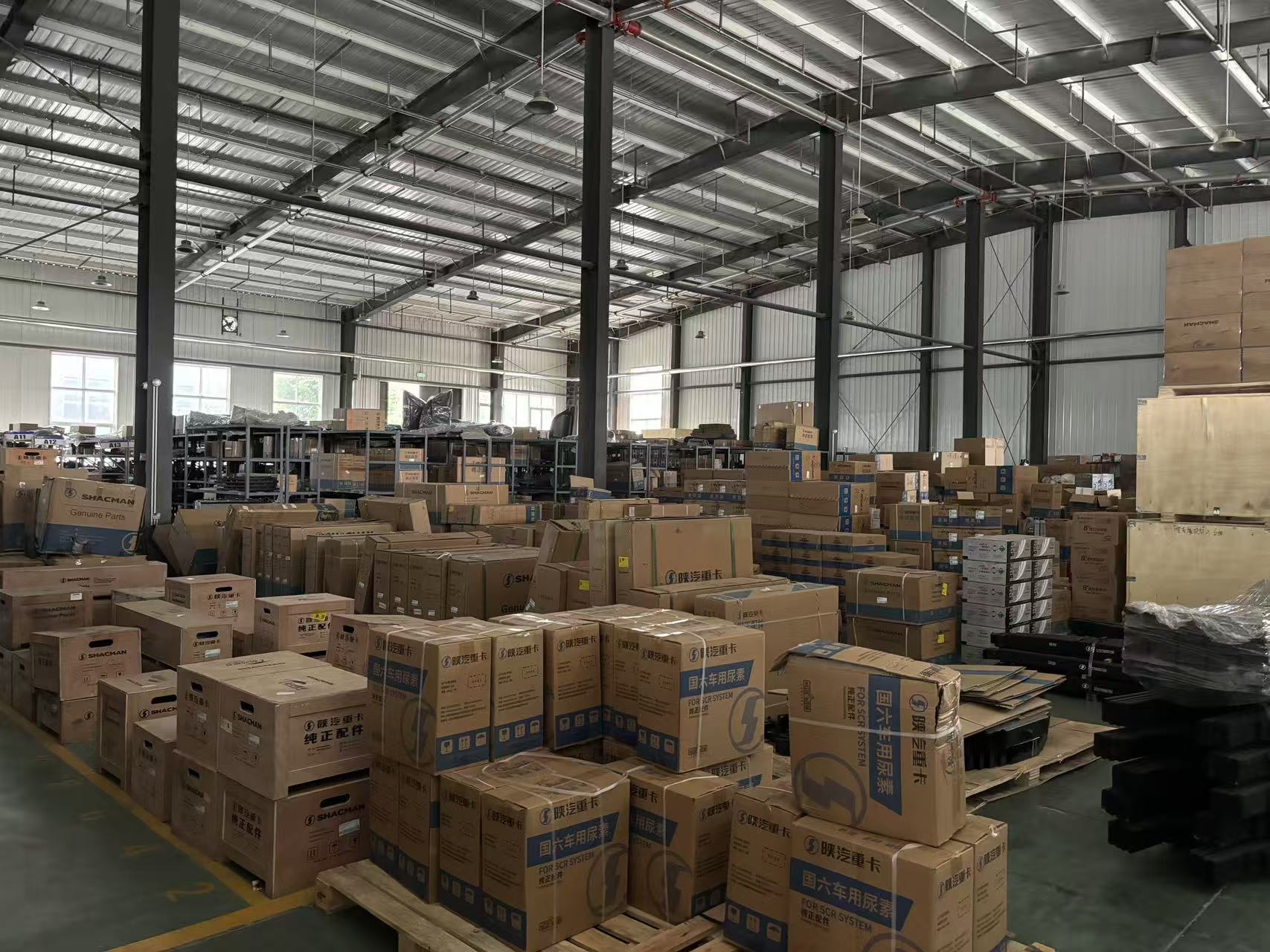
I started selling truck parts out of a single shipping container in 2005. Two pallets of stock, a laminated price list, and a phone number that I'd answer twenty hours a day. The first month I sold about $8,000 worth of parts. The second month I sold $14,000. By year three, I'd outgrown the container and moved into a 2,000 square meter warehouse in Jinan, with inventory I could see growing every quarter and a customer list that included buyers I never imagined talking to when I started.
Twenty years later, I run an operation that ships to more than thirty countries. The journey from that container to the current footprint wasn't linear, and it wasn't predictable. But there are patterns I can identify now that I wish someone had told me about then. This article is the business playbook for operating a heavy truck parts supply business serving African markets.
Some of this is specific to truck parts. Much of it applies to any B2B supply business in an emerging market. The lessons overlap more than you'd expect.
The Starting Capital Question
How much money do you need to start a truck parts business? The honest answer: more than you think you'll need, and less than you wish you had.
A realistic minimum viable operation — a trading operation that sources parts from existing manufacturers and sells them through digital channels — can start with as little as $50,000. This covers initial inventory, certification and business licenses, a website and basic digital marketing, and working capital for the first three to six months of operating expenses before the business is cash-flow positive.
A warehousing operation — renting warehouse space, buying in bulk, maintaining inventory for fast delivery — typically requires $250,000-500,000 in initial capital. This is the more sustainable model because customers will pay a premium for parts that are in stock today versus parts that have to be sourced tomorrow. But it's also the model that you can't just "try" — the capital commitment is real and the failure cost is significant.
The compromise that most successful operations settle into: start as a trader to prove the demand and build the customer list, then transition to a hybrid model once the cash flow supports it. The customer relationships you build as a trader become the foundation for an inventory business that serves those existing customers better than trading ever could.
What to Stock: The Inventory Decision
The biggest mistake first-time parts suppliers make is trying to stock everything. They walk through a distributor's catalog and order some of every section. They end up with a warehouse full of parts that haven't moved in a year and a customer asking for a part that isn't on the shelf.
The right approach is to start with a narrow inventory and expand based on actual demand. For truck parts, the highest-volume categories across every market we've analyzed are:
- Filters — these are universal consumables across every diesel truck platform
- Brake components — high consumption, standardized across platforms
- Engine parts — frequently replaced across all common platforms
- Electrical components — high failure rate, low unit cost
- Chassis and suspension parts — wear items with steady demand
Within these categories, the initial stock should focus on the parts that cover the most common trucks. For African markets, this is essentially HOWO A7 and T7H, Shacman F3000 and X3000, and the Weichai WP10 and WP12 engines. Stock deep on these platforms and ignore the long tail of unusual part numbers until your customer base demands them.
The economics of inventory turnover: parts typically yield gross margins of 30-60% depending on the category and competitive position. Inventory that turns twice a year is tying up capital at a loss — you're paying more in financing costs than you're earning in margin. Inventory that turns four times a year is acceptable. Inventory that turns six times a year or more is excellent. The parts that you should keep are the ones that turn at least three times a year.
Inventory management software — even a simple spreadsheet — is essential from day one. Every part needs a stock quantity, a reorder point, a cost, and a sales price. Every order taken out and every order received updates these numbers. Without this discipline, you'll think you have parts on the shelf that you don't have, and you'll have parts on the shelf that nobody wants.
Sourcing: Finding the Right Factories
The Jinan truck parts cluster is enormous — thousands of factories within a 50-kilometer radius making every conceivable heavy truck component. The quality spread among these factories ranges from genuinely excellent to absolutely terrible.
How to find the right suppliers:
Factory visits. There is no substitute for walking through a factory, looking at the production equipment, meeting the management, and evaluating the operations. A factory that won't let you visit its production floor is hiding something — either its actual size or its actual quality.
The first factories you should visit are the ones supplying major OEM customers. A factory that makes brake chambers for Sinotruk's OEM line has been through Sinotruk's vendor qualification process, which means Sinotruk's quality team has audited the factory and confirmed the parts meet their specifications. The same factory typically sells parts under its own brand at lower prices through the aftermarket.
Testing. Order samples from any new supplier and test them against a known-good part. Measure dimensions on critical features. Test material composition with a portable XRF analyzer if the value justifies the equipment. Run the part in the application if possible. Document everything — the test results become your quality baseline for that supplier.
Payment terms. A factory that demands 100% payment before production is either operating on thin margins or doesn't trust new customers. A factory that offers 30% deposit and 70% against bill of lading is in a stronger position and is confident enough in its products to offer that structure.
Communication. A supplier who responds within hours during your evaluation phase will respond quickly when you're a customer. A supplier who takes three days to answer a price inquiry will take three days to answer a quality claim. The communication test in the sales process predicts the communication quality in the operational relationship.
Pricing Strategy: Competing Without Competing
The hardest part of running a parts business in Africa is pricing against competitors who have lower costs, lower overhead, and, often, lower quality. You can't win on price alone. You have to win on value.
What "value" means in this market:
Parts availability. When the customer calls at 3 PM and needs a part tomorrow morning, having it on your shelf is worth more than having it at the lowest price. The customer will pay a 15-30% premium for the part that's in stock over the part that's coming from China in three weeks.
Reliable documentation. The shipping documentation that clears customs quickly, the invoice that lists the correct part numbers and HS codes, the packing list that matches what's actually in the carton. Customers save real money — in customs fees, in inspection delays, in rejected shipments — when the documentation is clean.
Technical support. The customer who isn't sure which of three part numbers fits their truck will call you rather than guess. If you can answer correctly, you've earned not just this sale but every future sale that comes from this customer.
Warranty handling. Something will fail. The question is how you handle it. A warranty policy that says "we'll replace it" is useless if the supplier doesn't pick up the phone when the failure happens. A supplier who handles warranty claims fairly and quickly, even at a small loss on the specific transaction, builds the kind of loyalty that survives any pricing attack from a competitor.
The tiered pricing model that works in most markets:
- Best price for customers who buy in bulk and pay cash
- Standard price for regular customers who buy consistent volumes
- Premium pricing for emergency/urgent orders and small one-time orders
Don't compete with the bottom-feeders on price. There will always be someone willing to undercut you by 20%, and they're probably cutting quality or service to do it. Compete with the customers who care about quality and reliability. That's a bigger market than it might seem.
Logistics: The Operational Backbone
The logistics operation for a truck parts exporter is more complex than the products themselves. Your customer needs the right part, with the right documentation, at the right destination, on the right day, without damage or delay. Every step of that sequence has potential failure modes.
The three logistics decisions that matter most:
Which freight mode. Sea freight is the default for anything that isn't urgent. LCL consolidation works for smaller orders. FCL is cheaper per unit for full container loads. Air freight is for genuine emergencies. Knowing when each mode is appropriate — and being willing to make that call without defaulting to the cheapest — keeps customers satisfied and the operation economically sustainable.
Which freight forwarder. A freight forwarder who specializes in China-Africa trade, has good relationships with shipping lines, and can get your cargo booked when space is tight is worth a 5-10% premium in fees over a generic commodity forwarder. The savings come from capacity that exists when you need it.
Which customs broker at the destination. Your customer is responsible for their own customs clearance, but you can recommend brokers in each major destination who are reliable. A customer who has a bad experience with a broker you recommended becomes a customer who looks for another supplier. A customer who has a good experience with a broker you recommended becomes a customer who trusts your judgment on other questions too.
Document everything. Every shipment should have a complete shipping file: commercial invoice, packing list, bill of lading, certificate of origin, inspection certificates, photographs of the packed goods. This file protects you in disputes and makes customs clearance faster for your customers.
Marketing: Getting Found
Twenty years ago, the marketing strategy for a truck parts exporter was to attend trade shows and hire sales agents in target markets. Today, the trade shows still matter but the digital channels have overtaken them.
The channels that work for truck parts:
Search engine optimization. When a fleet manager in Ghana needs a part and searches "Howo injector supplier," your website needs to appear in the first few results. SEO is a long game — six to twelve months of consistent effort before you see results — but it compounds. Every article on your site, every product page, every customer testimonial adds to your search authority.
Google Business Profile and trade directories. Not glamorous, but essential for basic visibility. A complete Google Business profile with photos, customer reviews, and updated hours is the first thing many prospects look at.
WhatsApp. The default messaging platform for business communication across Africa and the Middle East. Have a WhatsApp Business account with product catalogs, automated responses, and clear communication channels. A response time measured in hours is a competitive advantage in this market.
Trade shows. Attend the big industry events in target markets — Automechanika Johannesburg, Lagos International Trade Fair, Gitex in Dubai, the various construction equipment events in Europe. Face-to-face relationships still matter in this business. The customers who meet you at a trade show and shake your hand become customers who call you first when they need parts.
Referrals. The cheapest and most effective marketing channel. A happy customer telling a colleague about your reliable parts supply is worth more than any advertising you can buy. The math: every satisfied customer might bring one or two new customers over the life of the relationship. Focus on the satisfaction, and the referrals follow.
Customer Relationships: The Core of the Business
In this business, the customer relationship is the product. The parts are commodity — anyone with a phone and a shipping account can source parts. What differentiates a sustainable business from a one-time sale is the relationship you build with each customer.
The customer service practices that matter:
Know their fleet. When a customer calls and says they need parts, the follow-up question is "for which truck, and which VIN?" Tracking this information per customer, and using it to anticipate upcoming maintenance needs, is the highest-value customer service practice in this business.
Quote fast. A parts request that gets a quote within 24 hours is being taken seriously. A parts request that gets a quote within 4 hours is exceptional. Customers have choice. Speed of response is a tiebreaker that often breaks the customer's way.
Follow up after delivery. "Did the parts arrive? Were they correct? Did they install without problems?" A two-minute email or WhatsApp message three days after delivery tells the customer that you care about the outcome, not just the sale. This is the cheapest customer retention investment you can make.
Visit. Once a year, visit your top customers in person. Walk through their workshop, drive in their trucks, meet their mechanics, see how the parts are being used. The insights from those visits will reshape your inventory decisions in ways that the sales data never will.
The customer relationship that you want is the one where the customer calls you before they order, not the customer who calls you after they've decided to buy. Becoming the trusted advisor — the person they call with the question they don't want to ask their competitors — is the long-term competitive advantage.
Common Pitfalls
Cash flow management. The biggest killer of parts businesses is cash flow. You pay suppliers upfront, you ship on credit terms, and the gap between paying out and getting paid in can be 60-90 days. If your growth outpaces your capital, you run out of cash before you run out of customers. The fix is disciplined credit terms and disciplined cash reserves.
Counterfeit and quality problems. The Chinese truck parts market has counterfeit operations that target buyers who price-shop aggressively. Sourcing discipline — verified factories, test samples, document everything — protects you and your customers. The cheap-looking deal is almost always not the cheap deal.
Pricing wars. When competitors undercut you, the natural instinct is to match their prices. Don't. If they're pricing below your cost, they're either losing money or they're selling something different. Your pricing should reflect the value of the parts you sell and the service you provide. Compete on value, not on price.
Scope creep. Every customer who calls has a unique need. The temptation to do whatever the customer asks — to expand into product lines you don't understand, to take on customer financing you can't support, to handle logistics jobs outside your expertise — grows with every sale. Maintain focus. Your business is what your business is. Adding new product lines or services without the expertise and infrastructure to support them is a path to operational chaos.
The Numbers That Matter
At any point, you should be able to answer:
- What is my gross margin per order category?
- What is my customer concentration?
- What does my aged receivables look like?
- What is my inventory turnover?
- What is my customer acquisition cost?
These five numbers tell you whether the business is healthy. If any of them is going the wrong way, you want to know early — not after the cash flow crisis or the customer walkout.
Twenty Years In
The heavy truck parts business in Africa keeps growing. The trucks in operation keep multiplying. The local distribution networks keep maturing. The customers keep becoming more sophisticated. The opportunity keeps getting bigger.
But the basics haven't changed. Know your products. Know your customers. Source from factories you trust. Price for value, not for race-to-the-bottom competition. Handle logistics with competence. Communicate honestly. Honor your commitments, especially when it's expensive.
The parts business is a relationship business. The relationships compound. The trust you build this year is the foundation for the business you have ten years from now. This is what I've learned in twenty years. It might take you less time to learn it. But you have to learn it the same way — by doing the work, by treating customers right, and by standing behind what you sell.
Please contact us if you have any requirements.